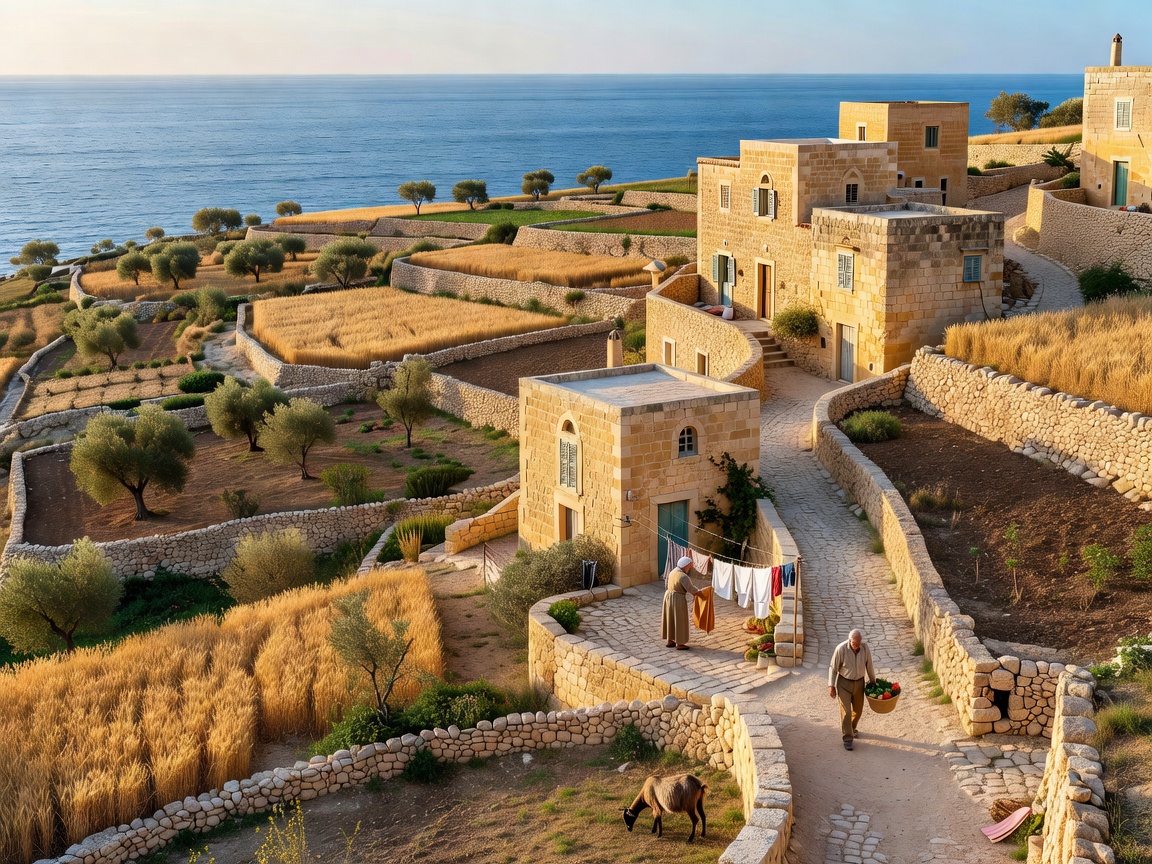
Gozo countryside village with limestone houses and terraced fields above the Mediterranean, evoking everyday life in Malta and Gozo

The Settlement Playbook

Moving to Malta: The Complete Guide

Residency, housing, tax, healthcare, schools, transport, money and culture — organised by what changes depending on your nationality, residency status and employment.

Chapter 01 · Depends on Nationality

Residency Pathways at a Glance

Use this matrix as a starting map. Eligibility criteria, income thresholds, fees and processing times are set by the authorities and change periodically — always confirm with the official source.

Malta residency pathways by applicant profile
ProfileTypical RouteKey Requirements (summary)Authority
EU / EEA / Swiss citizens
Free movement
Registration of residence & eResidence cardValid ID/passport; for stays over 3 months, evidence of employment, self-employment, study or sufficient resources and health cover.Identità
Third-country employees
Permit required
Single Permit (work + residence)Job offer from a Maltese employer; application usually employer-supported; labour-market and document checks apply. A Key Employee Initiative fast-track exists for qualifying highly skilled roles.Identità / Jobsplus
Remote workers (non-EU)
Permit required
Nomad Residence PermitEmployment with a foreign employer, own foreign business or freelance clients abroad; minimum gross income threshold; health insurance; accommodation in Malta.Residency Malta Agency
Retirees
EU & non-EU
Malta Retirement ProgrammePension income forming a substantial share of chargeable income; qualifying property purchase or rental; health insurance; special tax treatment on remitted pension.Malta Tax & Customs Administration
Non-EU high-net-worth
Investment
Malta Permanent Residence Programme / Global Residence ProgrammeProperty purchase or lease thresholds, government contributions and fees (MPRP), proof of capital, due diligence, health insurance.Residency Malta Agency
Students (non-EU)
Permit required
Study visa / residence permitAcceptance by an accredited institution, proof of funds, insurance and accommodation.Identità

Family members, long-term residence after five years, and citizenship routes have their own rules. Non-EU nationals may also need a Schengen visa to enter before applying. A licensed immigration adviser or lawyer can assess complex cases.

Chapter 02

Housing: Renting & Buying

Most newcomers rent first. Malta's long-let market is dominated by furnished apartments, with maisonettes and townhouses more common inland and in Gozo.

Renting essentials

  • Registration: Residential leases must be registered with the Housing Authority; this protects both parties and is needed for some permit applications.
  • Typical terms: long lets usually start at 12 months (a minimum of one year applies to long private residential leases, with some exceptions for specific purposes such as short-term or work-related lets); a deposit of around one month's rent is common.
  • Agency fees: often equal to a portion of one month's rent — clarify who pays before viewing.
  • Inventory & condition: photograph everything, check for damp and confirm air-conditioning and water heater functionality.
  • Utilities: confirm whether the property is billed at the residential tariff in your name.

Buying property

  • EU nationals who have resided in Malta continuously for five years can generally buy without restriction; others may need an Acquisition of Immovable Property (AIP) permit unless buying in a designated Special Designated Area (SDA).
  • The process typically involves a promise of sale (konvenju), a deposit, notary searches and a final deed. Stamp duty applies, with reliefs for certain first-time buyers.
  • Always engage an independent notary and, where needed, a lawyer and architect to verify permits.

Chapter 03 · Depends on Employment Status

Employment & Work

Key sectors include iGaming, financial services, tech, aviation maintenance, pharmaceuticals, healthcare, tourism and hospitality, and professional services. Many international employers cluster in St Julian's, Pembroke, Ta' Xbiex, Mriehel and the SmartCity area in Kalkara.

  • EU citizens may work without a permit; employers register employment with Jobsplus.
  • Third-country nationals generally need a Single Permit tied to the employer; changing employers usually requires a new application.
  • Self-employed & freelancers register for tax and social security as self-occupied; non-EU nationals need a suitable permit.
  • Regulated professions (doctors, nurses, lawyers, engineers, teachers) require recognition or registration with the relevant Maltese council.

Chapter 04 · Depends on Residence & Domicile

Tax & Social Security Basics

Malta operates progressive personal income tax with a top marginal rate of 35% and separate rate tables for single, married and parent computations. The tax year follows the calendar year.

  • Resident and domiciled: generally taxed on worldwide income.
  • Resident but not domiciled: generally taxed on Malta-source income and foreign income remitted to Malta; a minimum annual tax may apply in certain circumstances.
  • Special regimes: programmes such as the Highly Qualified Persons rules, Global Residence Programme and Malta Retirement Programme offer specific flat-rate treatment for eligible applicants.
  • Social security: employees pay Class 1 contributions (matched by employers); self-employed pay Class 2. Contributions underpin entitlement to state healthcare and pensions.
  • Double taxation treaties with many countries may affect your position — seek professional advice and consult the Malta Tax and Customs Administration.

Chapter 05 · Depends on Entitlement

Healthcare Access

Malta's public system is anchored by Mater Dei Hospital in Msida and Gozo General Hospital in Victoria, supported by regional health centres (e.g., Floriana, Gżira, Mosta, Paola) offering GP and nursing services.

  • Employed residents paying social security contributions and their dependants are generally entitled to free public healthcare.
  • EU visitors can use the European Health Insurance Card (EHIC) for necessary care during temporary stays; residents should transition to local entitlement.
  • Permit holders such as remote workers, retirees and investors are usually required to hold comprehensive private health insurance.
  • Private GPs, specialists and hospitals are widely used for speed and choice; pharmacies operate a Sunday and late-night rota.
  • Emergency number: 112.

Chapter 06 · Depends on Residence Status

Schools & Education

Education is compulsory from ages 5 to 16. Families choose among three main sectors:

  • State schools: free for eligible residents; teaching in Maltese and English. Fees or conditions may apply to some third-country nationals depending on permit type — check with the Ministry for Education.
  • Church schools: generally tuition-free with voluntary donations; places are often allocated by ballot.
  • Independent & international schools: fee-paying. Well-known options include Verdala International School (IB, Pembroke), QSI International School of Malta (Pembroke), St Edward's College (IB, Birgu/Cottonera), St Martin's College (Swatar), Chiswick House School (Kappara) and San Anton School (Mġarr).
  • Higher education: University of Malta (Msida), MCAST (Paola) and several private institutions.

Chapter 07

Getting Around

  • Buses: Malta Public Transport runs the island network; residents travel free with a personalised Tallinja card.
  • Ferries: harbour ferries link Valletta with Sliema and the Three Cities; Gozo Channel runs car ferries between Ċirkewwa and Mġarr; fast ferries connect Valletta and Mġarr.
  • Driving: vehicles drive on the left. EU licences remain valid; holders of other licences should check conversion or validity rules with Transport Malta.
  • Ride-hailing: Bolt, Uber and eCabs operate widely; bike and e-scooter use is growing but roads can be busy.
  • Airport: Malta International Airport in Luqa has extensive European connections.

Chapter 08

Banking, Utilities, Insurance & Connectivity

Banking

Major banks include Bank of Valletta, HSBC Bank Malta and APS Bank. Account opening involves rigorous KYC checks — bring your passport, residence document or proof of address, employment contract and source-of-funds evidence. Many newcomers use EU e-money accounts while waiting.

Utilities

Electricity and water are billed by ARMS Ltd on behalf of Enemalta and the Water Services Corporation. Tariffs depend on whether you are registered as a resident at the address and the number of occupants declared — update this promptly.

Mobile & internet

GO, Epic and Melita offer mobile, fibre and TV bundles. Prepaid SIMs are available instantly; contracts may require local ID and bank details.

Insurance

Consider health, home contents, motor (compulsory for vehicles) and travel insurance. Check whether your landlord's policy covers building damage only.

Chapter 09 · Interactive

Monthly Cost Estimator

A quick indicative budget based on our editorial rent ranges and typical household spending. Actual costs vary widely with property, habits and season.

Estimated monthly total

€0

    Indicative only. Excludes taxes, deposits, agency fees, school fees and one-off moving costs.

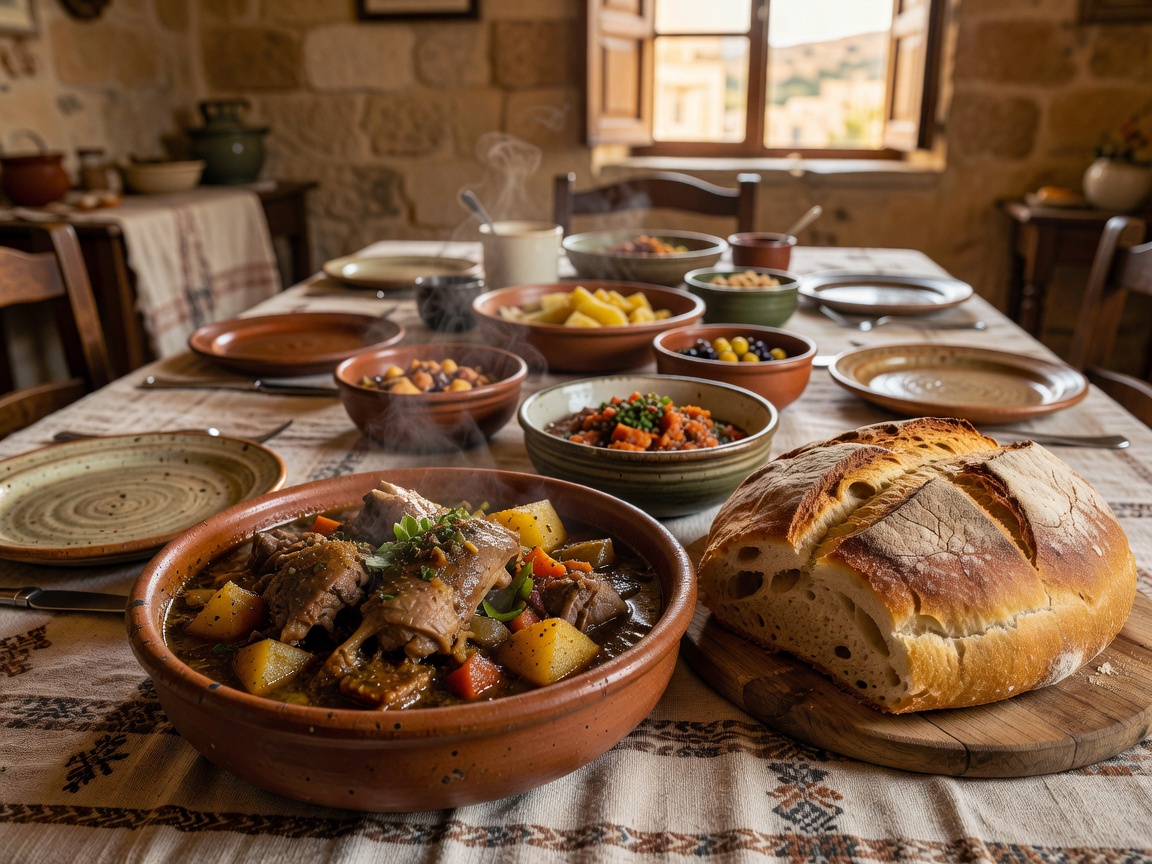
    Traditional Maltese Sunday lunch table with stuffat tal-fenek rabbit stew and crusty Maltese ħobż bread

    Sunday lunch is a family institution — accept the invitation.

    Chapter 10

    Culture & Daily Life

    Malta blends Mediterranean warmth with British-influenced institutions and a deep Catholic heritage. Village festas fill summer weekends with fireworks, band marches and street food.

    • Try pastizzi, ftira, ħobż biż-żejt and stuffat tal-fenek (rabbit stew)
    • Learn a few Maltese phrases — “Grazzi” (thank you), “Bonġu” (good morning)
    • Summers are hot and humid; air-conditioning is essential
    • Shops may close earlier on Sundays and public holidays
    • Bureaucracy rewards patience, appointments and photocopies

    Surrounding Highlights

    Weekend Field Trips for New Residents

    Settling in is easier when you fall in love with the place. These are the experiences residents return to again and again.

    I

    Mdina & Rabat

    The hushed “Silent City” and its neighbouring catacombs — perfect for an evening stroll and Fontanella's cakes.

    Central Malta
    II

    The Three Cities

    Birgu, Senglea and Cospicua offer harbour-side dining and the Malta at War Museum, a short ferry from Valletta.

    Grand Harbour
    III

    Marsaxlokk Sunday Market

    Colourful luzzu boats and the island's best fresh fish market every Sunday morning.

    South Malta
    IV

    Comino's Blue Lagoon

    Go early or off-season to enjoy the famous turquoise waters without the crowds.

    Comino
    V

    Dingli Cliffs

    Malta's highest point — sunset picnics, coastal walks and wide Mediterranean horizons.

    West Malta
    VI

    Ħaġar Qim & Mnajdra

    UNESCO-listed megalithic temples older than Stonehenge, set above the sea.

    Heritage Malta

    Official Resources

    Verify With the Source

    Identità

    Residence documents, eResidence cards, Single Permits.

    identita.gov.mt →

    Residency Malta Agency

    Nomad Residence Permit and residence programmes.

    residencymalta.gov.mt →

    Jobsplus

    Public employment service and employment registration.

    jobsplus.gov.mt →

    Housing Authority

    Lease registration and housing schemes.

    housingauthority.gov.mt →

    Tax & Customs

    Tax numbers, rates and special regimes.

    cfr.gov.mt →

    servizz.gov

    One-stop portal for Maltese government services.

    servizz.gov.mt →